
This Fettuccine Alfredo is proof that sometimes, the simplest ingredients create the most luxurious dishes. Perfectly al dente pasta, silky butter, rich heavy cream, and loads of Parmesan come together to make the ultimate creamy, cheesy, restaurant-quality Alfredo—in just 20 minutes. No need for jarred sauce when homemade is this easy and tastes 100x better!

Best Fettuccine Alfredo Recipe
A great Alfredo sauce comes down to technique and ingredient quality. Freshly grated Parmesan is non-negotiable—it melts smoothly into the sauce, while pre-grated cheese can turn grainy. Unsalted butter and heavy cream create a stable, glossy base that won’t split. And the starchy pasta water? It’s the secret to emulsifying everything into that perfect, creamy consistency. Get these right, and you’ll have a fail-proof Alfredo that’s rich, creamy, and better than anything from a jar!

Before You Start – What You Need to Know
- Use Freshly Grated Parmesan (No, Pre-Shredded Won’t Cut It) – Pre-grated Parmesan contains anti-caking agents that prevent it from melting smoothly, leading to a grainy, clumpy sauce. Always use freshly grated Parmigiano-Reggiano—it melts into the sauce, creating that silky, luxurious texture. The finer you grate the Parmesan, the easier it melts! A microplane or fine grater works best.
- Heavy Cream = Foolproof Alfredo – Traditional Italian Alfredo relies solely on butter, Parmesan, and pasta water—but adding heavy cream makes the sauce richer and more stable. The cream prevents the cheese from clumping and keeps the sauce from breaking. Can you skip the cream? Yes, but it requires precise timing and constant stirring to emulsify properly—cream makes it nearly foolproof.
- Pasta Water is Liquid Gold – Don’t Drain It All! – That starchy pasta water is the secret weapon. It binds the butter, cream, and Parmesan together, making the sauce smooth, glossy, and perfectly clingy. Always reserve at least 1 cup before draining the pasta—you’ll add it as needed to get the perfect sauce consistency. If the sauce is too thick? Add a splash of pasta water. If it’s too thin? Let it simmer for another minute.
- The Right Pasta: Why Fettuccine Works Best – Fettuccine’s wide, flat shape holds onto the creamy sauce better than thinner pasta like spaghetti. Other great options: Pappardelle for an extra indulgent feel, or tagliatelle for a silkier bite. I don’t recommend short pasta like penne or rigatoni—it won’t coat as evenly.
- The Secret to the Smoothest Sauce? Low Heat & Timing – Heat control is everything. If the sauce gets too hot when adding Parmesan, the cheese can turn grainy instead of melting smoothly. Once the cream simmers, reduce the heat to low before adding cheese, then whisk continuously for the best texture. Don’t let the Alfredo sauce sit too long after tossing with pasta—it thickens quickly, so serve immediately!
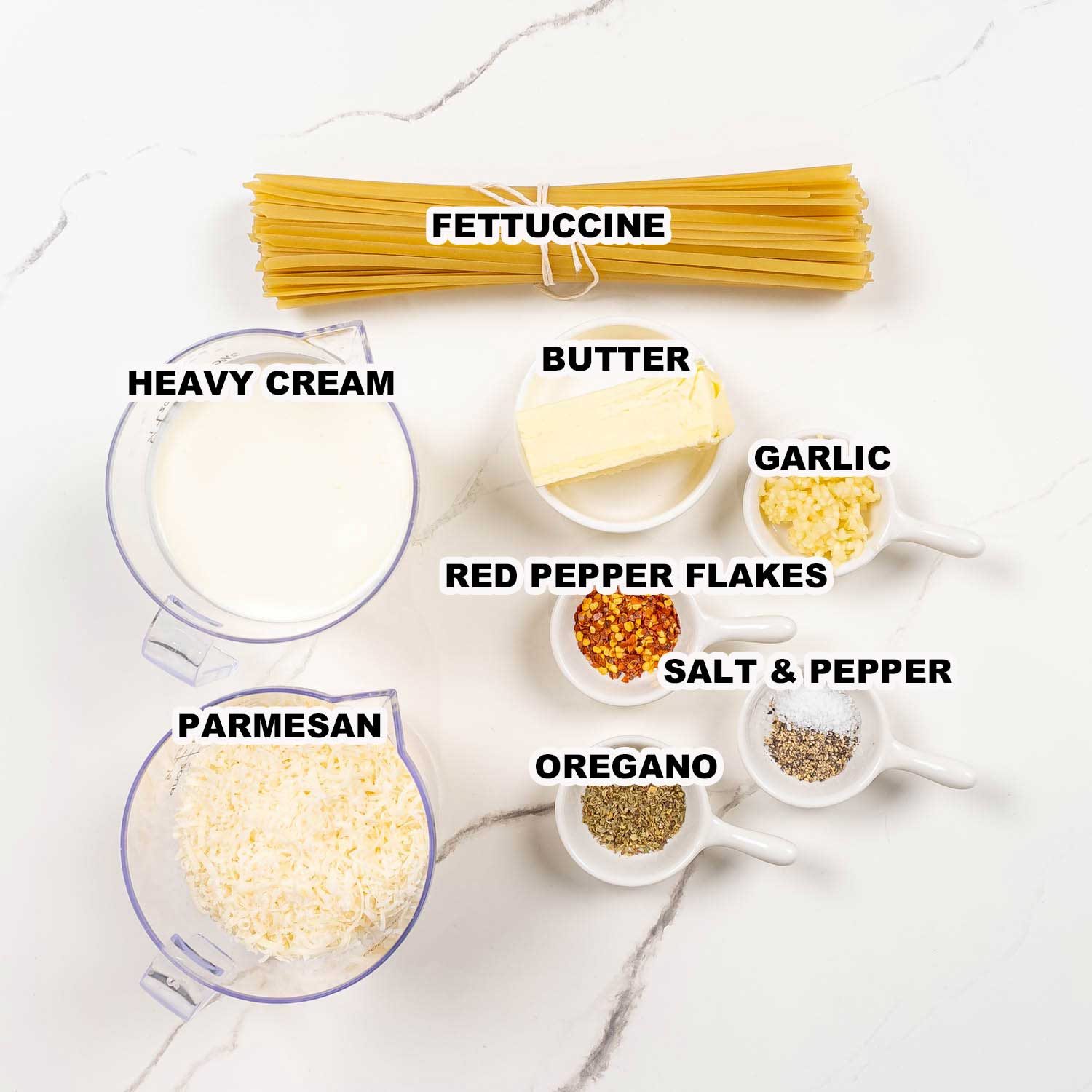
Ingredients You’ll Need
- Fettuccine – The Best Pasta for Alfredo! I always go for fettuccine because its wide, flat shape holds onto the creamy sauce perfectly. Thinner pasta like spaghetti doesn’t give the same luxurious coating, and shorter pastas like penne just don’t feel quite right. If you want to switch things up, pappardelle or tagliatelle are great alternatives.
- Butter – The Foundation of the Sauce – Unsalted butter is key here—it gives total control over the salt level. Since Parmesan is already salty, I don’t want to start off with salted butter and risk an over-seasoned sauce. More butter also means a silkier, richer Alfredo.
- Garlic – Not Traditional, But a Game Changer – Classic Roman Alfredo doesn’t include garlic, but I love adding it because it deepens the flavor and makes the sauce more complex. It’s subtle but noticeable, and it takes just 30 seconds of sautéing to bring out its best.
- Heavy Cream – The Foolproof Shortcut to Perfection – Traditional Alfredo relies only on butter, Parmesan, and pasta water, but let’s be real—heavy cream makes life easier. It stabilizes the sauce, prevents the cheese from clumping, and gives that ultra-luxurious texture we all love. If I skip the cream, I have to work twice as hard to keep the sauce from breaking.
- Parmesan – The Star of the Show – This is non-negotiable—it has to be freshly grated. Pre-shredded Parmesan has anti-caking agents that prevent it from melting smoothly, which is why it can turn Alfredo sauce gritty instead of creamy. I always go for Parmigiano-Reggiano and grate it myself for the best melt and flavor. The finer it’s grated, the better it melts! A microplane or fine grater is best.
- Pasta Water – The Secret Ingredient Most People Forget – I’m adding this as an ingredient here because I want to make sure you don’t forget it. I always reserve at least 1 cup of pasta water before draining because it’s liquid gold for Alfredo sauce. That extra starch helps the sauce cling to the pasta like a dream, creating that signature glossy finish. If the sauce ever feels too thick, a splash of pasta water brings it back to perfection.
- Oregano & Red Pepper Flakes – My Little Twist – A pinch of dried oregano isn’t traditional, but I love how it adds an herby depth to balance the richness. And a little red pepper flakes? Just enough to add a hint of warmth without making it spicy. Totally optional, but highly recommended!
How To Make Fettuccine Alfredo
This is one of those recipes where technique matters just as much as the ingredients. A perfect Fettuccine Alfredo is all about timing, heat control, and knowing how to bring the sauce together for that glossy, restaurant-quality finish. Here’s exactly how to do it—and why each step matters.
Cook The Pasta Like a Pro

To begin, bring a large pot of well salted water to a boil and really salt it generously. Why? Salting the water is the only chance to season the pasta itself—the sauce clings better to well-seasoned pasta.
Add the fettuccine and cook it just until al dente. Check the package instructions and go for the lower end of the cook time. Reserve at least 1 cup of pasta water before draining—it’s essential for emulsifying the sauce later.
Make The Alfredo Sauce

In a large skillet over medium heat, melt the butter until just bubbling. Add the garlic and sauté for 30 seconds—just until fragrant. Don’t let the garlic brown! It can turn bitter, so stir constantly and pull it off the heat if needed. Sprinkle in the salt, black pepper, and dried oregano to wake up the flavors before adding the cream.

Pour in the heavy cream, stirring constantly to prevent scorching. Once it just starts to simmer, reduce the heat to medium-low and let it gently bubble for 5 minutes. Why simmer? This step slightly reduces the cream, making it richer and thicker before adding the Parmesan.
Lower the heat to the lowest setting and slowly add the grated Parmesan, whisking constantly until fully melted and smooth. Why keep the heat low? If Parmesan is added to a sauce that’s too hot, it can clump and turn grainy. Gentle heat ensures it melts smoothly.
If the sauce looks too thick, add a splash of reserved pasta water to loosen it up. If it’s too thin, let it cook for another minute or two.
Toss Everything Together

Add the drained fettuccine straight into the skillet and toss well, coating every strand in the creamy sauce. If needed, add more pasta water little by little until the sauce reaches a silky, glossy finish. The sauce will thicken as it sits, so serve immediately for the best texture!
Plate the pasta immediately and garnish with extra Parmesan, a pinch of red pepper flakes, and fresh black pepper. Want to make it extra special? A drizzle of good-quality olive oil on top takes it to the next level.
A perfect Fettuccine Alfredo is all about simple ingredients, careful heat control, and using pasta water to get that ultra-creamy finish. Master these steps, and you’ll never need store-bought Alfredo sauce again!

Frequently Asked Questions (FAQs)
1. Can I make Alfredo sauce without heavy cream?
Yes! Traditional Italian Alfredo sauce uses only butter, Parmesan, and pasta water. Heavy cream is added here to make the sauce richer and more stable, preventing it from splitting. If you skip the cream, increase the butter slightly and whisk constantly to emulsify the sauce properly.
2. Why does my Alfredo sauce turn grainy or clumpy?
This usually happens if you use pre-shredded Parmesan (which contains anti-caking agents), add the cheese over too high heat, or add it all at once. To avoid this, use freshly grated Parmesan, add it slowly over low heat, and whisk constantly. If the sauce becomes grainy, whisk in a bit of warm pasta water to smooth it out.
3. Can I substitute milk for heavy cream in this recipe?
You can, but the sauce will be thinner and less rich. To thicken it, add more Parmesan, a spoonful of cream cheese, or a cornstarch slurry (1 tsp cornstarch mixed with 2 tsp water). Keep in mind the texture and richness will differ from the classic version.
4. How do I reheat leftover Fettuccine Alfredo without it separating?
Reheat gently on the stovetop over low heat, stirring in a splash of milk or cream to loosen the sauce. If microwaving, heat in short 20-second bursts, stirring in between with a little milk. Avoid high heat to prevent the sauce from breaking and turning oily.
5. Can I prepare Fettuccine Alfredo ahead of time or freeze it?
Alfredo sauce is best made fresh. If making ahead, store the sauce separately from the pasta and reheat slowly over low heat with a bit of milk or cream. Freezing is not recommended because cream and cheese tend to separate, resulting in a grainy texture. If freezing, freeze sauce alone (not with pasta) and reheat gently.